
Breast Reduction in Tunisia
By reshaping the breast and removing excess tissue, it relieves physical strain while creating a natural, well-proportioned result.
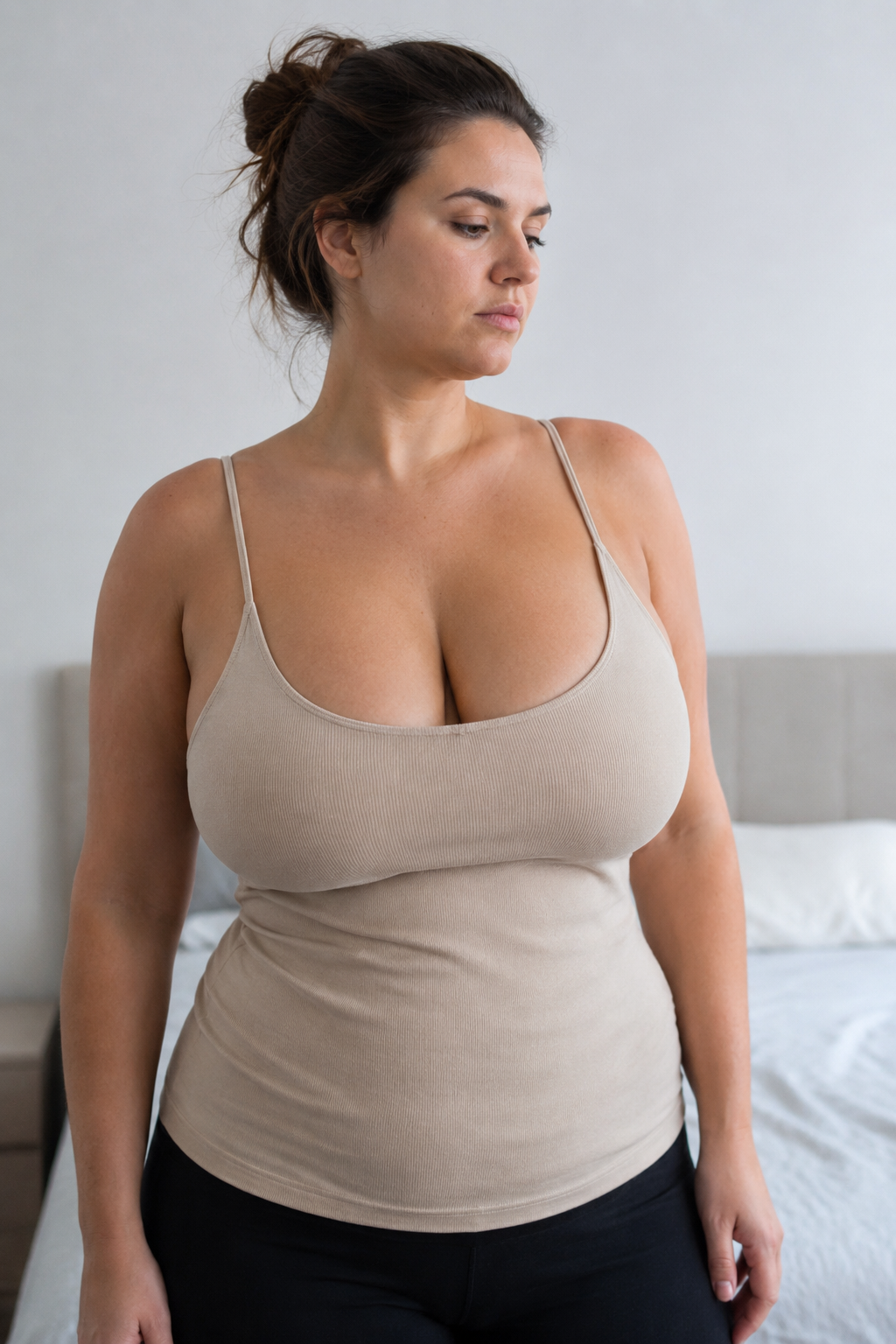
What is Breast Reduction in Tunisia
For Dr. Zied Mabrouki, breast reduction is a medical procedure centered on restoring physical comfort, postural balance, and anatomical proportion, rather than following aesthetic trends. Excess breast volume can lead to chronic back and neck pain, shoulder strain, skin irritation, and limitations in daily movement, significantly impacting quality of life.
Breast reduction is therefore approached as a structural reconstruction. It involves precise removal of excess glandular tissue, careful reshaping of the breast, and repositioning of the nipple–areola complex to maintain natural sensation, symmetry, and long-term stability.
Every surgical decision is guided by medical integrity and functional outcomes, ensuring results that feel natural, age well, and allow the body to move freely and comfortably.
In a clear and structured medical journey, patients benefit from expert care at every stage; rom the first consultation to long-term follow-up. What does your journey include?
Types of Breast Implants
When you choose breast augmentation, there are several implant options available to match different goals and preferences:
The Anchor Pattern (Inverted T)
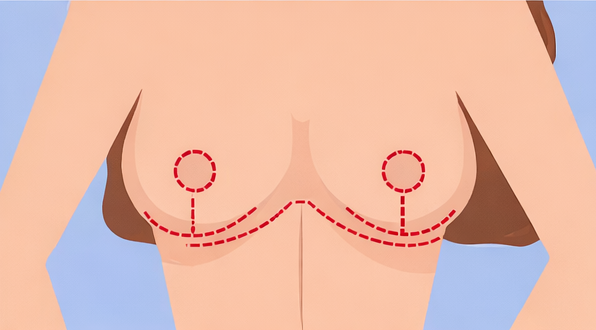
Often utilized for more extensive reductions, the anchor technique is the most traditional approach. It involves three distinct incision points: a circular cut around the border of the areola, a vertical line extending toward the base of the breast, and a horizontal curve along the natural inframammary fold. This configuration allows for comprehensive access to remove large amounts of glandular tissue and fat, offering the most significant degree of lifting and reshaping.
The Lollipop Pattern (Vertical)
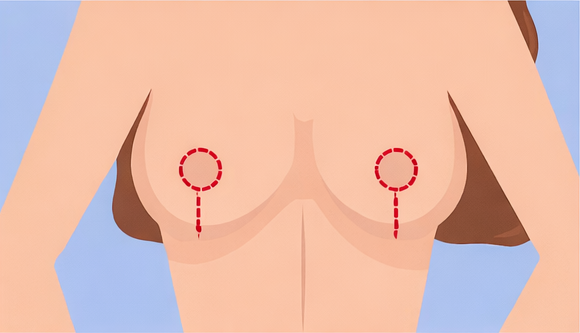
The vertical or lollipop incision is generally recommended for patients requiring a moderate amount of correction. This method eliminates the horizontal scar along the breast crease by using only two incisions: one encircling the areola and another running straight down to the base of the breast. This technique is highly effective for tightening the skin envelope and elevating the nipple position while keeping the overall surgical footprint more contained.
The Surgical Process in Tunisia
A breast augmentation procedure typically takes 1 to 2 hours and involves the following surgical steps:
- Anesthesia Administration: Medications (intravenous sedation or general anesthesia) are administered for comfort.
- Incision Making: The surgeon makes an incision in one of three predetermined, inconspicuous areas to minimize visible scarring: the fold under the breast (inframammary), around the nipple (periareolar), or in the armpit (transaxillary).
- Creating the Pocket: The surgeon separates the breast tissue from the muscles and connective tissue to create a pocket for the implant. This pocket is placed either under the pectoral muscle (submuscular) or directly behind the breast tissue, over the muscle (submammary/subglandular).
- Implant Insertion and Placement: The implant is inserted into the pocket.
- Saline implants: Inserted empty and filled with sterile salt water once in place.
- Silicone implants: Inserted pre-filled with silicone gel.
- Adjusting Position: The surgeon centers the implant behind the nipple and checks for symmetry.
- Closing the Incisions: The incisions are closed in layers using sutures, skin adhesive, or surgical tape.
- Bandaging: The chest is wrapped with gauze, and a surgical bra or compression garment is applied to support the breasts and reduce swelling.
Undergoing breast augmentation in Tunisia is a streamlined, professional experience. The surgery itself takes about 75 minutes and is performed under general anesthesia.
Dr. Zied Mabrouki makes a small, precise incision: usually in the crease under the breast (inframammary), around the nipple (periareolar), or in the armpit (axillary). The goal is always to minimize visible scarring. Once the pocket is created, the implant is placed with extreme care to ensure symmetry. The internal sutures are done with absorbable thread, meaning there is no stress about having stitches removed later.
Recovery and Expectation
Recovery is generally faster than most patients anticipate. While you will feel some tightness, you won’t be bedridden.
- Support is Key: You will need to wear a medical-grade sports bra for at least 30 days. This keeps the implants in the correct position while the healing process stabilizes the tissues.
- Pain Management: You will likely feel like you’ve had an intense chest workout.Dr. Zied Mabrouki provides a customized pain management plan to ensure you stay comfortable during the first 48 hours.
- Lifestyle Changes: You can usually return to desk work within a week. However, heavy lifting and intense gym sessions should be avoided for 6 weeks to prevent any displacement of the implants or unnecessary strain on the healing incisions.
Why does Dr. Mabrouki prioritize this surgery?
Large breasts almost always lead to breast ptosis (sagging). It’s simple math: weight eventually wins over skin elasticity. The patients who visit us in Tunisia are often at their wit’s end, tired of hiding their bodies under baggy clothes.Plastic surgery in Tunisia offers a long-term solution that gives you back an athletic, proportionate silhouette.
During your consult, Dr. Zied Mabrouki doesn’t just look at the chest. He looks at your spine and your hips. This global check helps him decide whether to remove 300g, 500g, or more per side. We want to find that “sweet spot” where your body stops hurting and you feel like yourself again.
Frequently Asked Questions
It’s a tricky one. Often, yes, because Dr. Mabrouki tries to keep the milk ducts connected. But if the reduction is very large, breastfeeding might be tougher. It’s something to talk about honestly during your first meeting.
Once the breasts have finished growing, usually around 17 or 18. There’s no real upper limit either, as long as you’re healthy. Many women wait until after kids, but it’s common for young girls suffering from back pain to ask for help sooner.
They start out red: that’s normal. But with healing creams and time, they turn white. Within a year, you won’t even notice them in the mirror. It’s a tiny price to pay to stop having back pain every single night.
Let’s Begin with a Medical Consultation
Every patient journey starts with a careful medical evaluation.
Our priority is to understand your expectations, assess your medical profile, and determine whether a surgical or non-surgical treatment is appropriate for you.
From the first consultation to post-treatment follow-up, patients are guided with clarity, transparency, and professional medical care at every stage of the process.
By completing the appointment form, you can share the details of your request, medical history, and concerns. A response from our medical team will be provided within 24 hours to help you schedule a personalized consultation.
If you have additional questions regarding treatments, the consultation process, or next steps, our team remains available to provide clear and accurate medical information.