
Breast Lift in Tunisia
By lifting and reshaping the existing tissue, the procedure creates a more youthful and harmonious silhouette, with natural and durable results.
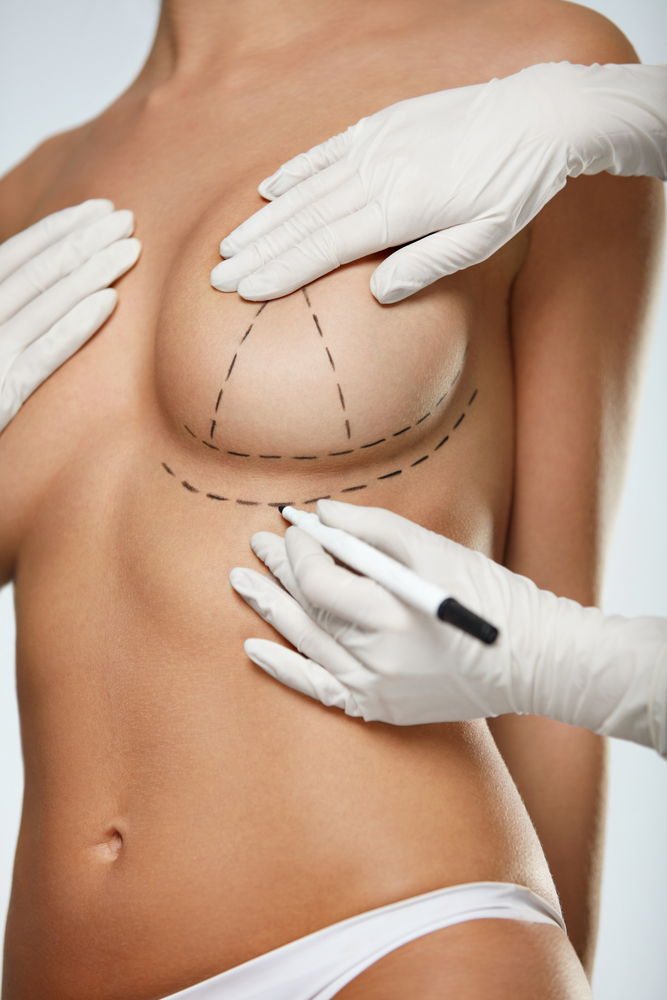
What is Breast Lift in Tunisia?
Over time, pregnancy, weight fluctuations, and gravity naturally affect the breasts, leading to loss of firmness and sagging. A breast lift in Tunisia (mastopexy) is the surgical solution recommended by Dr. Zied Mabrouki to correct breast ptosis and restore a youthful, elevated bust, without necessarily increasing volume.
For Dr. Mabrouki, a breast lift is not about changing the breast, but about repositioning existing tissue to recover natural shape and projection. During the free initial consultation, factors such as skin elasticity, degree of sagging, areola position, and body proportions are carefully analyzed to design a tailor-made surgical plan.
By lifting the mammary gland, reshaping the skin envelope, and recentring the areola, Dr. Mabrouki achieves long-lasting results that respect breast anatomy, preserve sensitivity, and allow the bust to age gracefully over time.
In a clear and structured medical journey, patients benefit from expert care at every stage; rom the first consultation to long-term follow-up. What does your journey include?
Who is Good Candidate for Breast Lift?
Why do breasts sag? It’s simple physics. Skin loses its elasticity over time, and the Cooper’s ligaments, which support the gland, begin to stretch. This often occurs after pregnancy, due to “yo-yo” dieting, or simply because of the long-term effects of gravity.
A breast lift is designed for women who feel their breasts no longer “hold” without a bra. If you feel your nipples are pointing downward, this procedure is the solution.Dr. Zied Mabrouki analyzes your skin quality and the degree of the drop to determine the most effective technique, ensuring a rejuvenation of the bust without sacrificing nipple sensitivity.
Breast Sagging (Ptosis) Grades
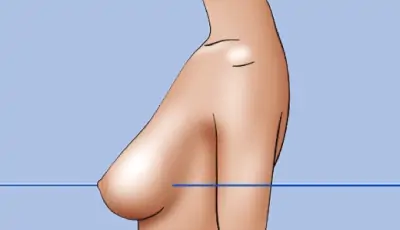
Breast ptosis is categorized based on how the nipple position relates to the breast crease.
Morphological Profile Correction (aesthetic)
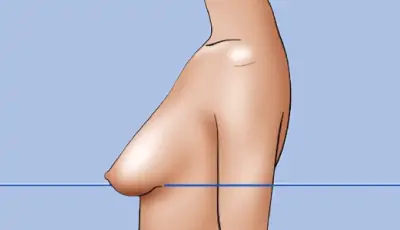
Grade 1 (Mild Ptosis)
The nipple is at or just below the breast crease, with only slight sagging and a mostly natural shape.
Grade 2 (Moderate Ptosis)
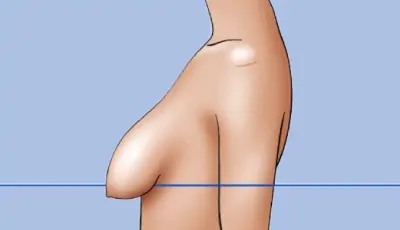
The nipple sits below the breast crease but remains above the lowest part of the breast, showing more noticeable sagging.
Grade 3
(Severe Ptosis)
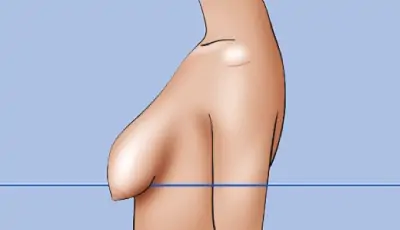
The nipple is far below the breast crease and often points downward, with significant sagging.
Pseudo
Ptosis
Types of Breast Lift Incisions
This is often the primary concern for patients: the scar. For a breast lift, the scar is the “trade-off” for lifting the tissue, but Dr. Mabrouki utilizes advanced suturing techniques to make them as discreet as possible.
Healing is a gradual process, but with the specific care protocols provided in Tunisia, these marks fade into thin, pale lines that are often forgotten after a year.
Periareolar Lift
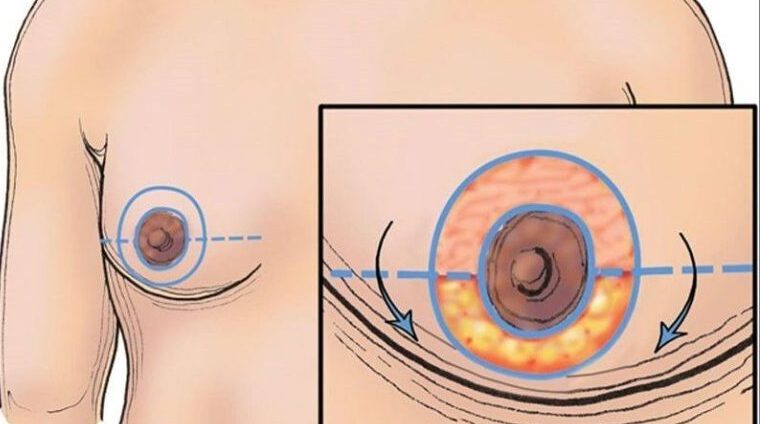
For minor sagging, a single incision around the areola is sufficient. This is the most inconspicuous technique.
Vertical Lift
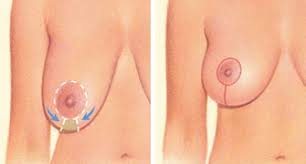
If the ptosis is moderate, a vertical incision is added. This allows for better forward projection of the breast.
Inverted T or Anchor Lift
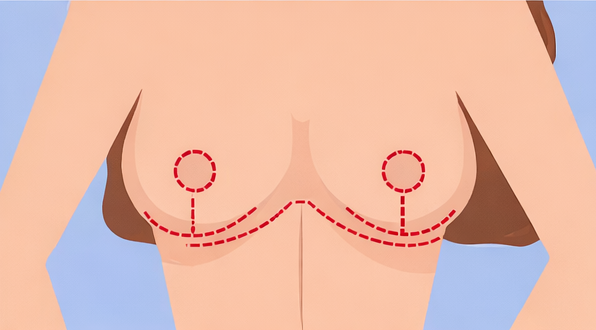
For significant sagging, this is the comprehensive method. It allows for the removal of substantial excess skin while perfectly reshaping the contour.
Healing is a gradual process, but with the specific care protocols provided in Tunisia, these marks fade into thin, pale lines that are often forgotten after a year.
Breast Lift Surgery Process
Step-by-Step Surgical Procedure:
- Anesthesia and Preparation: The patient is placed under general anesthesia (or occasionally IV sedation) and the skin is cleansed.
- Marking: The surgeon marks the breast skin with a pen while the patient is in a sitting or standing position to plan for the new, higher nipple position.
- Incision Making: Incisions are made according to the chosen technique (e.g., around the areola, vertically down, or along the crease).
- Reshaping Tissue: The surgeon lifts and repositions the breast tissue, using internal sutures to create a firmer, more conical shape.
- Repositioning the Nipple-Areola Complex: The nipple and areola are moved to a higher position on the breast mound. They remain attached to their underlying blood supply, and the areola may be reduced in size if necessary.
- Skin Removal and Closure: Excess, stretched skin is removed from the lower part of the breast. The remaining skin is tightened and brought together, closing the incisions with stitches, surgical tape, or skin glue.
- Final Touches: Dressings, bandages, and a surgical support bra are applied to hold the new shape and reduce swelling.

Breast Lift Post-Op and Recovery
A mastopexy lasts between 2 and 3 hours under general anesthesia. It is not considered a particularly painful surgery; patients usually describe it as a sensation of heaviness or muscle tightness.
- Immediate Post-Op: You will wear a shaping bandage, followed shortly by a compression bra. This bra is your best friend for the first month.
- Rest: You should plan for about ten days off work. Lifting heavy objects is strictly forbidden during the first month to avoid straining the sutures.
- Follow-up: Dr. Mabrouki ensures close monitoring. Stitches are typically absorbable, which simplifies the recovery process. Edema gradually subsides, revealing a shape that looks increasingly natural.
- Pain Management: Moderate discomfort, soreness, and tightness are normal, with the most intense pain lasting 2–3 days. Pain medication is typically prescribed, shifting to over-the-counter options after a few days.
- Support & Care: A supportive, non-wired surgical bra must be worn 24/7 (except for showering) to manage swelling.
- Activity Level: Light walking is encouraged immediately to aid circulation, but strenuous activity, bending, and lifting must be avoided.
- Restrictions: Driving is generally restricted until pain medication is stopped and arm movement is comfortable, often about 1–2 weeks post-op.
- Return to Work: Most patients can return to non-strenuous, desk-based work within 3–7 days, or up to 2 weeks for more active jobs.
- Exercise: Brisk walking can start around week 2, with a return to normal, non-strenuous exercise typically allowed around 4–6 weeks.
- Physical Restrictions: No heavy lifting or high-impact activities (running, jumping) for at least 4 weeks.
- Sleeping: Back sleeping with pillows elevating the head is recommended for the first few weeks to reduce swelling.
- Scar Care: Incisions take time to heal, with scars initially red/raised before fading over 6–12 months.
- Sensory Changes: Numbness or increased sensitivity in the nipples and breast skin is common, which usually resolves within 3–6 months.
- Final Results: While the initial shape is visible after 6 weeks, the final, settled shape of the breasts can take up to 1 year.
- Avoid Smoking: Smoking impairs blood flow and slows healing; avoid it for at least 2 weeks post-surgery.
- Keep Scars Covered: Protect healing incisions from direct sunlight for up to a year.
- Follow Post-Op Instructions: Adhere to all surgeon instructions regarding medication, showering, and activity to ensure a smooth recovery.
Frequently Asked Questions
Yes, in most cases.Dr. Mabrouki preserves the gland and milk ducts as much as possible. However, a future pregnancy could potentially alter the aesthetic results achieved.
They never disappear entirely, but they “mature” and whiten. After 12 to 18 months, they are usually very faint. The quality of healing also depends on genetics and following post-op rules (no smoking, no sun exposure).
A lift repositions the breast without changing its weight. A reduction removes glandular tissue to alleviate back pain. The technical steps are similar, but the goals are different.
For access to world-class aesthetic surgery at fair prices.Dr. Zied Mabrouki offers high-end expertise and a human touch that is hard to find elsewhere, all within ultra-modern clinical settings.
Let’s Begin with a Medical Consultation
Every patient journey starts with a careful medical evaluation.
Our priority is to understand your expectations, assess your medical profile, and determine whether a surgical or non-surgical treatment is appropriate for you.
From the first consultation to post-treatment follow-up, patients are guided with clarity, transparency, and professional medical care at every stage of the process.
By completing the appointment form, you can share the details of your request, medical history, and concerns. A response from our medical team will be provided within 24 hours to help you schedule a personalized consultation.
If you have additional questions regarding treatments, the consultation process, or next steps, our team remains available to provide clear and accurate medical information.